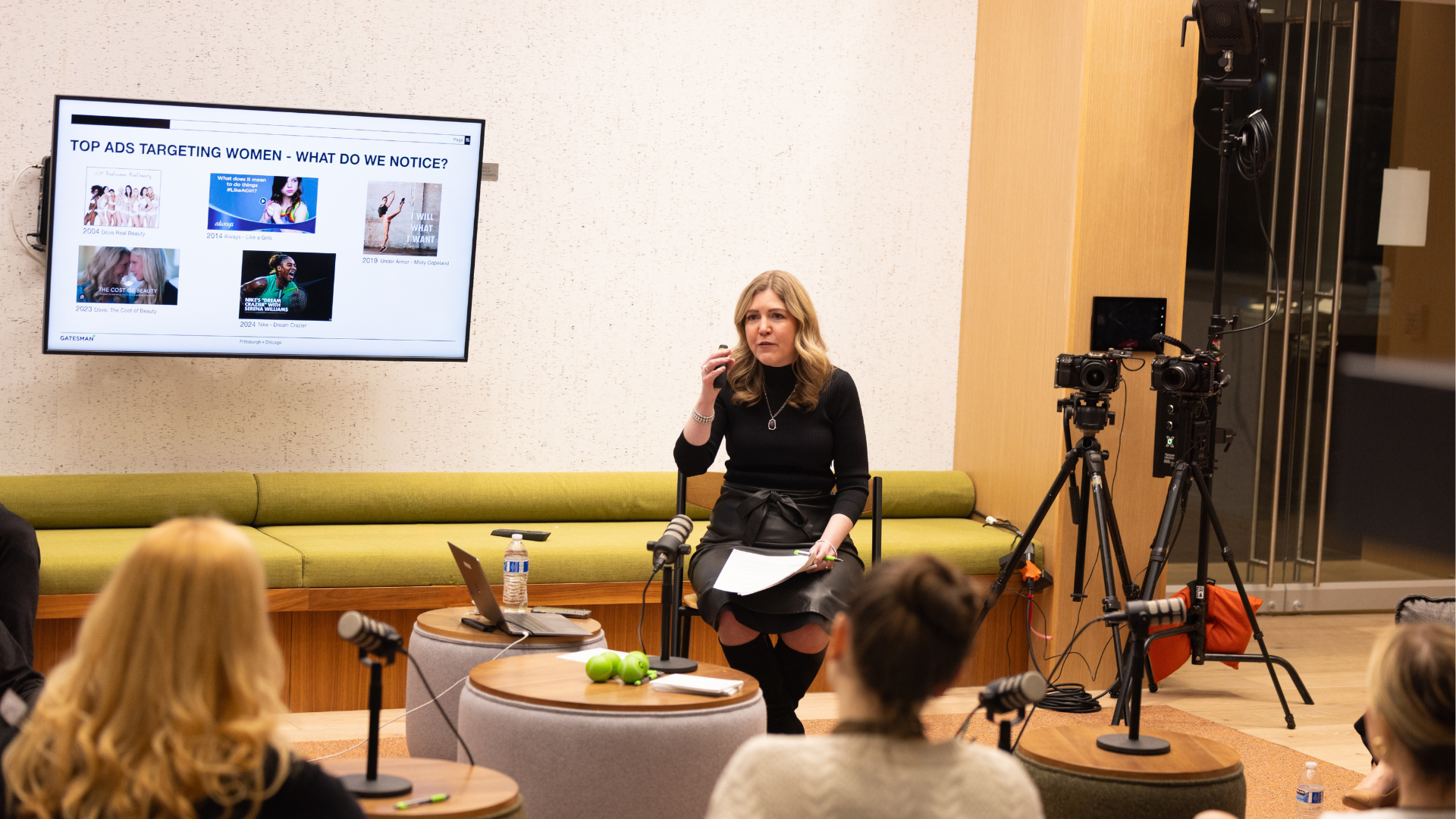
4 Takeaways and Tips to Help Marketers Strike the Right Tone
Women are arguably the most powerful segment in the marketplace today. They make the majority of day-to-day spending decisions, they significantly outnumber men in higher education and they are shaping the culture in new ways. Most businesses believe they are tuned into the importance of women as consumers, as employees and as influencers. Yet, far too many are out of touch with how much has changed for women in the past five years and are still marketing to who they used to be.
In our new Women ReKnown research report from Gatesman, we take a fresh look at women, and explore how and why women are taking a collective pause to reevaluate what matters most to themselves, their families and their futures. We outline how this “Era of Reflection” is reshaping what women expect from brands and what marketers can do to connect authentically.
After all, if women are re-evaluating, brands must, too.
Below are my top takeaways and tips from the research. To learn more about the full study and download the report, click here.
#1 - A Crisis of Self – Women’s Identities Are in Flux. In our research, we analyzed how women aged 30-60 describe themselves, revealing key insights into their self-concepts and self-worth. Our data showed that women are more likely than men to describe themselves as affectionate and generous and less likely to view themselves as self-assured or egotistical. In short, they see “caring for others” as a core strength, and “self-focus” as a relative weakness. The “others before self” aspect of women’s identities runs deep, and many take pride in how consistently they show up for the people around them.
The problem is that “this area” has grown dramatically.
- New norms have expanded the spheres of others women feel responsible for – family, community, workplace, society, planet, humanity.
- Social media has vastly amplified exposure to others’ needs.
- Expectations for “success” have ballooned – higher costs, more health priorities, expanded beauty routines, fuller calendars, endless forms.
Each "failure" to meet expectations in these expanded areas hits hard and chips away at self-worth. Women historically adapted by pushing harder and prioritizing themselves less, literally collapsing at the end of the day before scrolling themselves to sleep. The COVID years made most women recognize that this existence was unsustainable, forcing them to truly self-reflect, offer themselves grace, accept the imperfect, and let go of some of their most basic drives to keep giving. However, at the subconscious level, focusing on themselves felt at odds with their “others before self” identities. That tension added to their conflicted feelings as it challenged their core beliefs, but also left them hungry to redefine success and get to know themselves anew, a process that is continuing today.
And because women are in the midst of self-reflection, they strongly reject when others presume understanding. “How can you know me when I don’t know myself?”
What this means for marketing – Don’t Assume.
- Avoid definitive language and tread lightly with relative comparisons like “only” or “easy.” A simple, 15-minute recipe may not feel simple at all when you only have 5 minutes to spare. Instead, try language like, “This 4-ingredient recipe takes about 15 minutes.” This wording leaves the woman to judge whether it will be “simple.”
- Don’t tell a woman what she will think or feel about your offering. Share the benefits of your offering, and let her decide for herself. For example, not “you will love the ease,” but rather, “streamlined steps save time.”
.jpeg)
#2 - Negativity Is the Default, But Hope Is the Goal. As part of the research, we completed an exercise with a visual tool called a Feelings Wheel and asked women to identify their top three vibes these days. Negative emotions outperformed positive ones 1.7 to 1 — with “anxious” and “powerless” topping the list. However, the longer women talked about their feelings, the more they were likely to conclude on a positive emotion. This shows that negative feelings are top-of-mind with women, but they want to return to their natural positive state.
We also learned about several coping mechanisms women are using to protect themselves from negativity. These included outright rejecting activities or communications that have a negative tone and focusing on how they can positively impact their closer circles — like family, friends and local community, while shying away from larger-scale issues they can’t control — like climate change or national politics.
What this means for marketing: Promote Positivity.
- Avoid sensational, fear-based headlines.
- Don’t restate well-known problems; move straight to the solution.
- Offer levers of control: clear choices, transparent information, easy-to-use interfaces.
#3 - Women Are Carrying Too Much. Systemic disease, mental health issues and stress all spiked during and following the pandemic. Women caring for children and/or elderly parents are particularly stretched, and women are leaving the workforce at alarming rates. The growing population of working women without children have their own areas of frustration, such as assumptions that they’re less busy or less fulfilled.
What this means for marketing: Lighten Their Load.
- Know your audience’s stressors. Recognize the frustrations playing in the background as messages are consumed. For example, a stressed mom may not be as receptive to messages suggesting time investment in yet another area.
- Make sure you are plugged into what your audience of women values, so you can position your offering to deliver. Most women value saving time — sell a streamlined process. Most women value “removing guilt.” Sell them a decision they can make confidently by leading with ethical sourcing, fair labor or generous return policies.
- Consider focusing on women-to-women relationships, which are more consistently viewed as a positive escape rather than an added stress.
#4 - Advertising Representation Isn’t Enough: Insight Over Inclusion. Women appreciate greater diversity in race and body type, but say there are still too many single-dimension portrayals of women. For example, not every mother’s motivation revolves only around her kid.
Many stereotypes also remain that continue to frustrate women, including:
- The assumption that women “need fixing.”
- The misperception that showing a woman flustered and hurried is relatable.
- The presumption that all women want to be married and have children.
- The myth that women can, or should, have it all.
- The falsehood that most women want to be younger than they are.
What this means for marketing: Go Beyond Boxes.
Women appreciate seeing women who look like them in advertising, but “checking the inclusivity box” isn’t enough. Marketers need to dig deeper for unsaid truths that unify women or, even better, offer a solution that demonstrates understanding.
In other words, “Insight over inclusion, and action over insight.”
Change Is in the Air
It’s not easy to know women, especially when they are reinventing themselves, but sticking to old playbooks isn’t an option. Women have weathered a truly challenging period and are showing incredible resilience as they adapt, and in their determination to make a positive turn by defining success on their own terms.
Businesses that listen and learn, lift women up, and solve problems that demonstrate understanding — these organizations will connect so strongly and credibly that loyalty and community will build naturally.
To explore Women ReKnown insights in more depth — or discuss how your brand can authentically connect with women in this Era of Reflection — reach out to me at senglish@gatesmanagency.com.

.png)