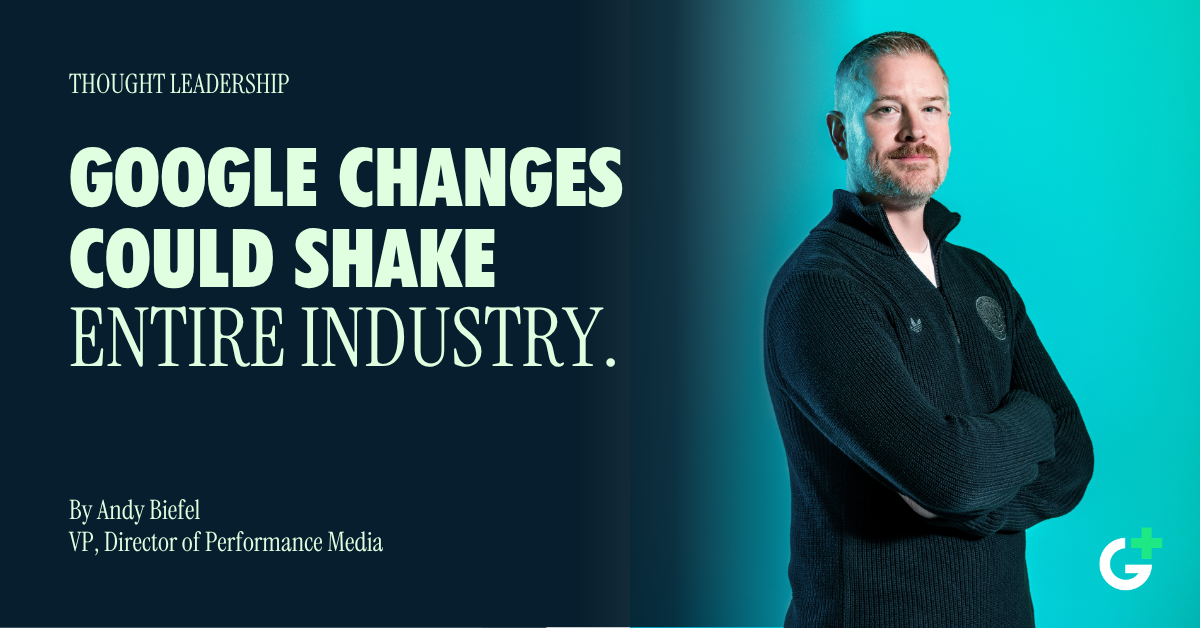
Google’s latest AI search announcements may represent one of the most significant shifts in digital discoverability since the introduction of paid search advertising.
For brands and advertisers, the implications are immediate: if users no longer interact with traditional search results pages, how will brands remain visible? And what happens to the paid and organic strategies that marketers have relied on for decades?
At Gatesman, we’re already helping clients evaluate how AI-driven search experiences could reshape discoverability, media investment and content strategy across the entire customer journey.
What’s changed?
At Google’s I/O conference on Tuesday, the company, which remains the largest player in the search landscape by far, announced a fundamental shift in the way information is requested by and presented to users of Google search. Gone are the days of entering a brief query into the search box and sifting through a results page populated with links to find the most relevant and reputable source of information. Instead, Google is reimagining the search experience to be more in line with a conversation you might have with your AI large language model of choice. Long-form, natural language queries will soon take users to an AI-driven, curated “results page” meant to provide deeper insight and take away the need for users to dig through sources to find the most relevant answers to their questions.
This shift may signal the death knell for keyword-driven paid search campaigns that allowed advertisers to pay to place sponsored links at the top of the results page. With a fundamentally altered results page experience, advertisers must rethink how their brands can maintain discoverability. Fortunately, Google already has an answer: AI Max campaigns.
AI Max campaigns leverage Google’s AI (obviously) to contextually match relevant brand ads with users across a variety of Google properties, including search, YouTube, Gmail and Gemini. And it is the only reliable way for brands to ensure that their paid ads will be discoverable within AI search results. Brands that have been on the fence about leaning into AI-powered Google Ads campaigns in the past are now on notice.
What does this all mean? Net net, it’s imperative that brands create a plan to test into and transition to AI Max campaigns in the near future. The brands that don’t risk seeing dwindling engagement coming from their Google Ads efforts.
The implications of Google’s announcements don’t just impact Google Ads alone. They have the potential to create a ripple effect across the greater industry.
By shifting away from indexing the contents of the internet and providing a list of links that allowed brands of all sizes a chance at discoverability, Google may inadvertently be hamstringing new and small businesses. Without an established reputation as a reliable resource, new and small businesses may struggle to gain a foothold within Google’s curated AI chat results at the expense of larger, more established brands, particularly if they lack a strong generative engine optimization (GEO) plan to help AI-driven web crawlers find and recommend their content. The end result may be a consolidation of product availability from a handful of well-known brands and retailers at the expense of consumer choice and, possibly, at consumers’ expense.
Likewise, small and independent online publishers are likely to encounter discoverability challenges as users no longer choose sources for themselves, but are at the whims of Google’s AI to choose what limited sources are presented to them. Here again, we may see a reduction in media sources as independents struggle to compete with the resources and reputations of larger conglomerates. In addition to the loss of independent voices and opinions across the internet, the trickle-down effect of such a consolidation within the ad world could be a reduction in available ad inventory as display networks shrink in size and CPMs eventually rise.
While the actual impacts of this week’s announcements from Google remain to be seen, it does seem apparent that their accelerated push into AI will have wide-ranging effects beyond their own walled-garden, and brands and advertisers need to start planning for how to adapt to remain discoverable within this new world of search.
The team at Gatesman is already helping our clients navigate the complexities of discoverability with GEO audits and action plans to navigate this new world of search and can do the same for you. Contact us to learn more.
About Gatesman:
With offices in Pittsburgh and Chicago, Gatesman offers expertise in strategy/branding, advertising, public relations, social media, digital and analytics. Gatesman is a partner in AMIN Worldwide, an alliance of over 60 independent marketing agencies, IPREX, a global communications network and most recently the Ad Age Small Agency Network. Gatesman is also proud to be recognized as one of Ad Age’s Best Places to Work, reflecting its commitment to a strong, people-first culture.
###
.jpg)